Why the Estates are hard on drain fields
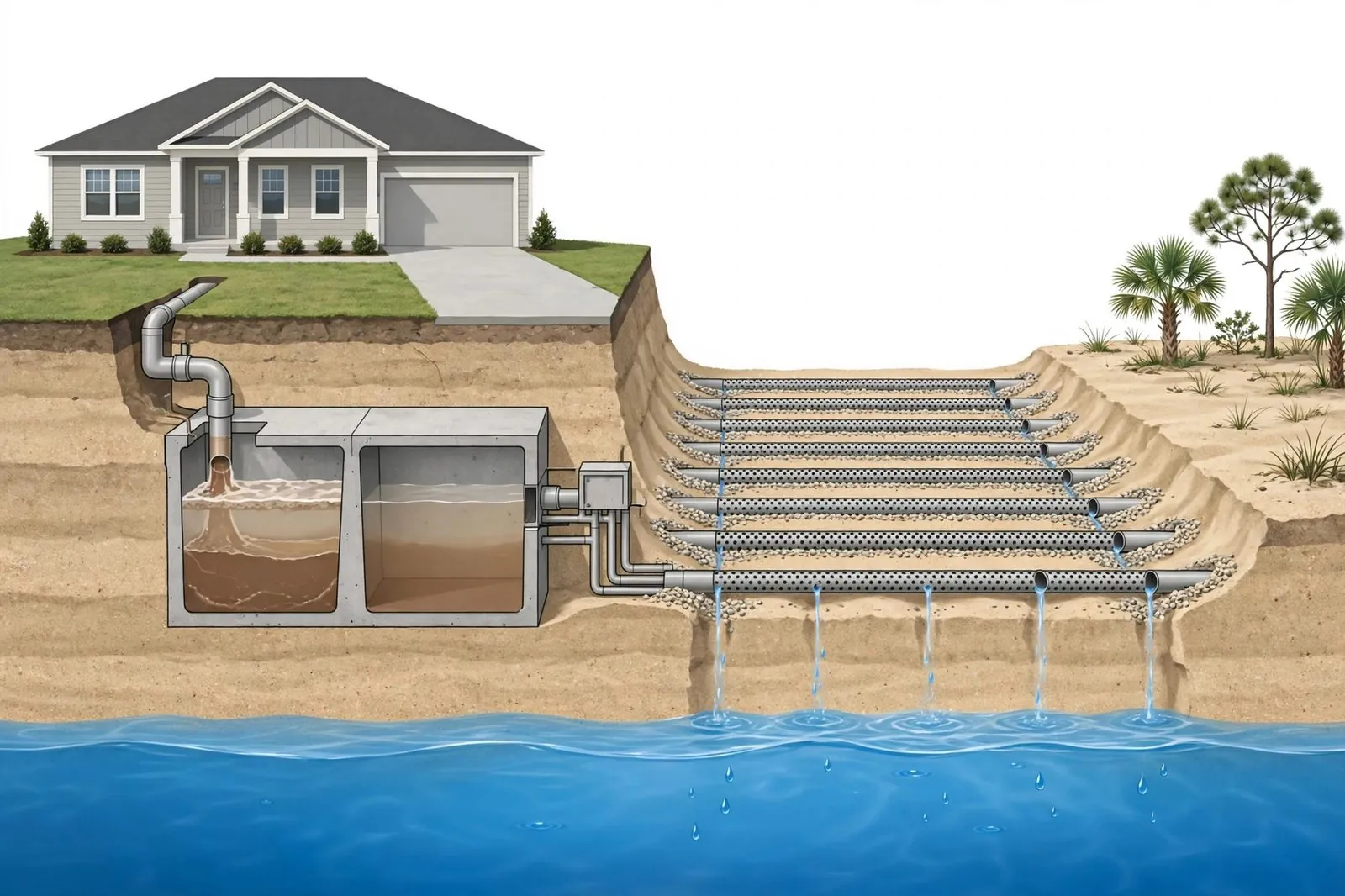
Golden Gate Estates lots are large, and most homes run on a well and a septic system rather than city sewer. Two features of the ground itself shape how those systems perform: a water table that can sit high, especially after rain, and sandy soil that drains fast in some places and unevenly in others. A drain field needs unsaturated soil below it to treat effluent as it filters down. When the water table rises into or near the drain field, that treatment zone shrinks, and the field can struggle to keep up.
Sandy soil helps in one way and hurts in another. It lets water move quickly, which is good for drainage, but it can also let effluent travel with less treatment than heavier soil provides, and it does not hold its structure the way clay does. That is why two neighbouring lots can behave differently: depth to water, soil layers, and the age and design of the system all matter, and none of them are visible from the surface.
What a stressed drain field looks like
- Soggy or unusually green patches over the drain field, especially after rain
- Sewage odors outdoors near the field, or indoors near drains
- Slow drains or gurgling in more than one fixture at once
- Effluent surfacing on the ground — this is an urgent problem, not a wait-and-see one
- Repeated backups that return even after pumping
None of these signs by itself proves the drain field has failed. A clogged effluent filter, a full tank, or a broken pipe can mimic drain-field trouble. That is why a contractor checks the tank and the field together before recommending a repair or a replacement.
Why drain-field life varies so much here
There is no single reliable lifespan for a drain field in the Estates, and anyone quoting one without seeing the system is guessing. What varies is the combination: how high the seasonal water table gets, how the soil drains, how the system was sized for the household, how regularly the tank has been pumped, and how much water the household uses. Regular pumping protects the field by keeping solids out of it; skipping pump-outs is one of the few factors a homeowner fully controls.
If a replacement is ever on the table, costs vary widely with the system type and site conditions. As a general planning range only, drain-field work is often around $5,000–$12,000 and a full system replacement around $8,000–$15,000, before permit and evaluation costs. Those are planning ranges, not quotes — a contractor prices the actual site.
Related services: Drain-field repair and replacement Septic tank pumping Septic inspection
Florida rule, plainly: Onsite sewage (OSTDS) install, repair, or modification must be performed by a state-licensed contractor under a county health department permit. Verify any contractor's license before work begins. This site is owned by Mojo Labs; Mojo Labs does not perform septic work. Inquiries are forwarded to a licensed local contractor.