Golden Gate Estates • Naples FL • Drain Fields
Soggy patches, odor, or unusually lush grass over the field often point to the field, not the tank. Drain-field work is the biggest septic job most homeowners ever face — which is exactly why it needs a soil evaluation and a permit before anyone quotes a final price.
Calls answered 24/7 at (239) 216-9911 by our AI receptionist. Messages are collected by Mojo Labs and passed to a Florida-licensed contractor.
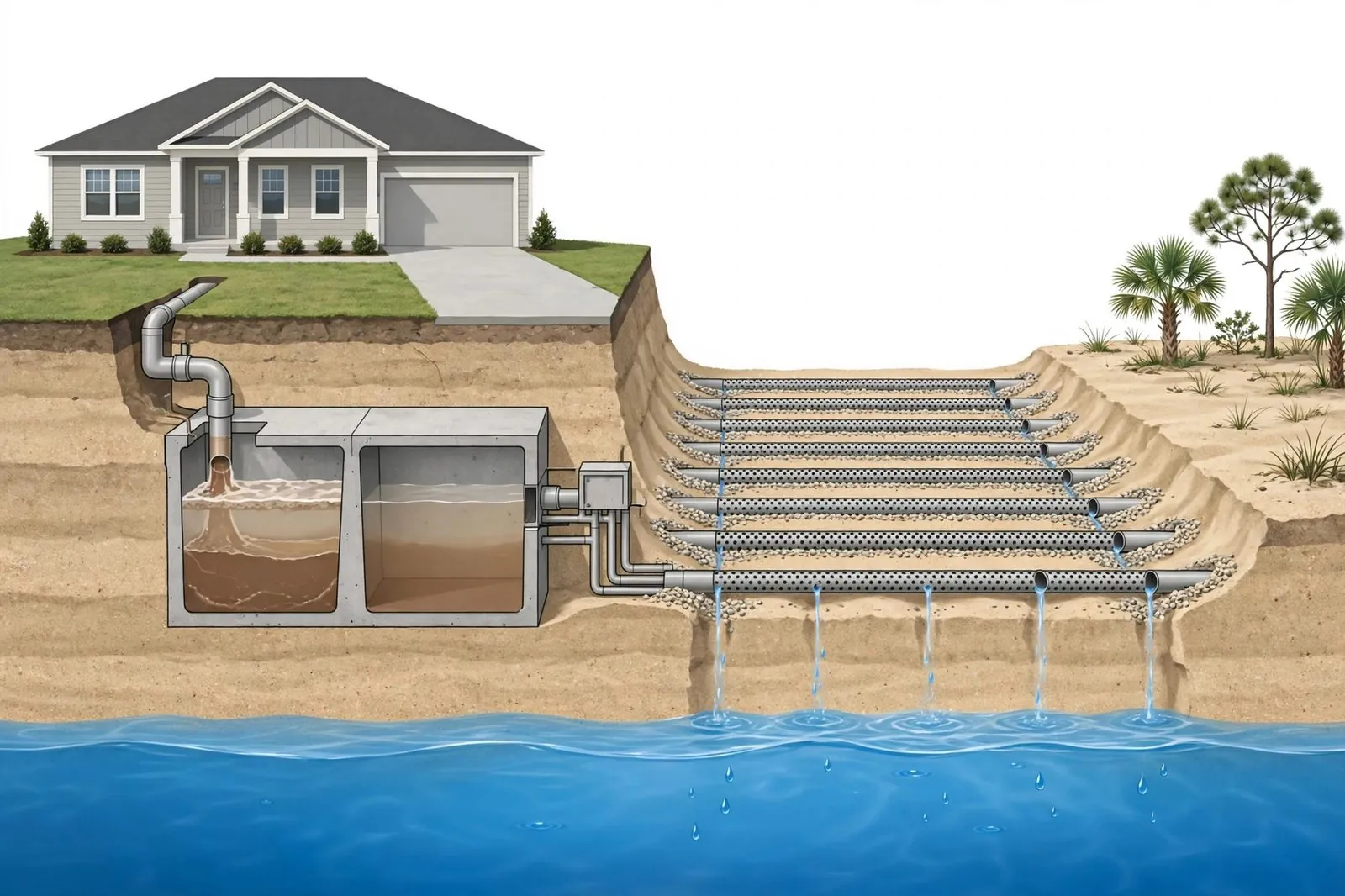
The drain field is where treated water leaves the tank and filters through soil. When it stops absorbing — because of age, solids carried over from skipped pump-outs, a high water table, or soil that never suited the original design — water surfaces, odors appear, and grass over the field grows suspiciously well.
Not every field problem means a full replacement. A distribution problem, a settled line, or a section that can be repaired is a different job from a field that has failed throughout. Telling the difference takes an on-site evaluation: soil, water table, setbacks from wells and water, and the condition of the existing field.
In Florida, a replacement also requires a county health department permit and a soil/site evaluation. Any contractor who offers a fixed replacement price over the phone, with no site visit and no mention of a permit, is skipping the steps that protect you.
Tank, filter, and lines are checked first, so a field replacement is not sold for a problem that was actually in the tank.
Soil type, seasonal water table, well and water setbacks, and available area decide what kind of field can go in — conventional or advanced — and where it can legally sit.
The county health department permit and soil/site evaluation come before a final price. You get the field type, the permit steps, and the on-site price in plain language before work starts.
Most Estates homes sit on large lots with a well and a septic system — not city sewer. Sandy, limestone-based soil and a high water table put extra strain on every part of the system, especially after heavy rain. A contractor who works the Estates regularly checks soil, water table, setbacks from wells and water, and whether you have a conventional system or an ATU/PBTS — before recommending work. We're homeowners in this area ourselves, and we know these lots are not like a small city lot: access, setbacks, and drainage all change what the job takes.
Published Florida ranges: drain-field work roughly $5,000–$12,000 by field type, and a full system replacement roughly $8,000–$15,000, before permit and evaluation fees. The final price depends on field type, soil, water table, setbacks, and access on your lot — it is only set after an on-site evaluation, never as a fixed quote over the phone.
Backups that return after pumping, soggy or foul-smelling patches over the field, and lush striped grass over the field all point to the field. An on-site evaluation confirms it before any replacement is recommended.
Yes. OSTDS modification and replacement require a state-licensed contractor and a county health department permit, plus a soil/site evaluation. Work without a permit can create problems when you sell the home.
Sometimes — a distribution or section problem can be a repair. A field that has failed throughout needs replacement. The evaluation, not a phone call, decides which one you have.
For the fastest help, call (239) 216-9911 — answered 24/7. You can also see the full service list and the callback section on the Golden Gate Septic homepage. Please call rather than relying on a form submission: the homepage callback form is not yet connected to a mailbox.